When you suspect a mold problem, the terminology used by professionals can feel like a maze. “Do I need a test? Or do I need an inspection?” While they sound the same, choosing the wrong service can lead to wasted money, unresolved health issues, and structural damage that continues to spread behind your walls.
This guide breaks down the technical and practical nuances between mold testing and mold inspection to help you make an informed decision for your home.
1. Defining the Mold Inspection: The “Detective Work.”
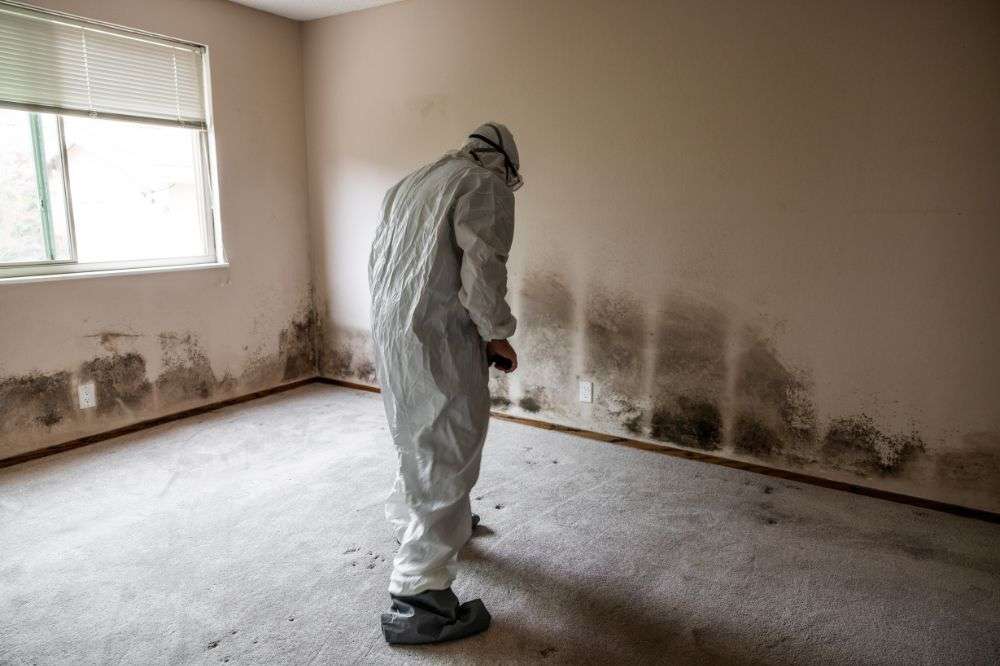
A mold inspection is a physical, visual evaluation of a property. Think of the inspector as a detective; their goal is not just to find the mold, but to identify the moisture source that allows it to survive.
The Scope of a Professional Inspection
A high-quality inspection goes far beyond a quick walk-through. It typically involves:
- Intrusive Visual Checks: Looking under sinks, behind appliances, and inside HVAC vents.
- Moisture Mapping: Using moisture meters to detect the percentage of water saturation in drywall, wood, and carpeting.
- Thermal Imaging: Using infrared cameras to find cold spots behind walls, which often indicate hidden leaks or condensation.
- Structural Assessment: Evaluating the “bones” of the home. Inspectors often find that crawl space and attic mold are the primary culprits for poor indoor air quality.
When is an inspection enough?
If you can see the mold and you know where the leak is (e.g., a burst pipe), a physical inspection is often sufficient to begin the mold remediation process.
2. Defining Mold Testing: The “Laboratory Science.”
Mold testing is the process of collecting samples for analysis by a mycologist in a laboratory. Testing answers the questions: What kind of mold is it? And how many spores are in the air?
The 4 Primary Testing Methods
- Air Sampling: This is the most common method. Using a calibrated pump, the professional pulls a specific volume of air through a collection “cassette.” This reveals the “spore trap” data.
- Tape/Swab Sampling: If you see a suspicious stain, a swab or tape lift collects the physical residue to determine if it is active fungal growth or just heavy dust.
- ERMI (Environmental Relative Moldiness Index): A more advanced dust-sampling method that looks at the DNA of mold species in the home.
- Bulk Sampling: Removing a piece of contaminated material (like a 2×2 square of carpet) to see how deeply the hyphae (mold roots) have penetrated.
Why test for species?
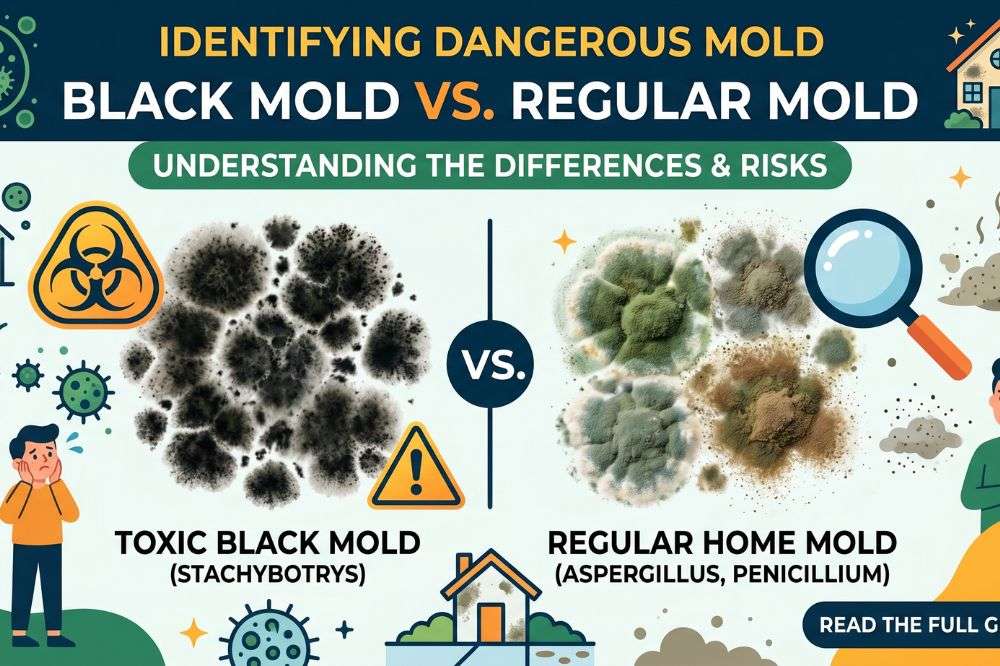
Certain species, like Stachybotrys chartarum, are more concerning than others. Understanding the dangers of black mold, its detection, and removal protocols is essential, as some moulds produce mycotoxins that require specialised containment strategies.
3. Side-by-Side Comparison: Testing vs. Inspection
| Feature | Mold Inspection | Mold Testing |
| Primary Goal | Locate moisture and mold extent. | Identify species and spore concentration. |
| Tools | Infrared, moisture meters, flashlights. | Air pumps, swabs, lab microscopes. |
| Immediate Result | Identification of the leak/water source. | Confirmation of toxicity levels. |
| Required For | Planning the physical cleanup. | Legal proof, medical diagnosis, or “clearance.” |
| Cost Factor | Generally, a flat fee for the visit. | Fee per sample taken + lab processing fees. |
4. When Do You Need Both?
In many cases, an inspection is incomplete without testing, and testing is useless without an inspection. You should opt for both if:
A. You Have Unexplained Health Symptoms
If family members are suffering from chronic coughs, skin rashes, or headaches, you need to understand the health effects of indoor mold exposure. Testing the air will tell you if the spore count is high enough to trigger these symptoms.
B. Post-Remediation “Clearance”
After a professional cleans up a mold problem, how do you know it’s actually gone? Post-remediation testing compares indoor air with outdoor air. If indoor levels are equal to or lower than outdoor levels, the home is “cleared.”
C. Real Estate Transactions
Buyers often want an inspection to ensure the home is structurally sound, while lenders or insurance companies may require a lab test to confirm there is no active biohazard.
5. The Role of Moisture Prevention
Neither testing nor inspection will matter if you don’t fix the underlying water issue. Professional inspectors focus heavily on how to prevent mold after water damage.
Common moisture triggers include:
- High humidity (above 60%).
- Poorly insulated windows.
- Slow-dripping pipes inside wall cavities.
- Improperly graded landscaping that pushes water toward the foundation.
6. How to Choose a Professional
According to the IICRC (Institute of Inspection, Cleaning and Restoration Certification), a mold professional should follow strict S520 standards.
Pro Tip: Be wary of companies that offer “Free Mold Testing.” Often, these companies use a “pass/fail” kit that isn’t sent to a lab, or they use the free test as a “hook” to sell you expensive, unnecessary services. A true professional provides a detailed lab report from a third-party AIHA-accredited laboratory.
Summary: Your Action Plan
- Start with an Inspection: If you smell mold or see water damage, get a pro to find the source.
- Add Testing If Needed: Use testing to confirm the species or to provide “Clearance” after a cleanup.
- Address the Water: Fix the leak first, or the mold will return within 24–48 hours.
- Remediate Professionally: Use a certified team to ensure spores don’t spread to other rooms during the cleaning process.
Do you suspect mold is hiding in your home? Contact DKJAY Restoration today for a professional assessment to keep your family safe and your home dry.