Two homes on the same street can sustain water damage on the same day, yet one homeowner pays $2,500 while the other faces a bill over $25,000. The square footage is similar. The water volume looks comparable. So why the gap? The answer almost always comes down to one technical decision the restoration technician makes within minutes of arriving on site: the water category.
That single classification dictates which materials can be dried in place, which must be torn out, what protective equipment is required, and how much of the work an insurance carrier will actually cover. This guide breaks down Category 1, 2, and 3 water in plain English, explains why the differences matter, and shows how they end up reshaping the final invoice.
The IICRC S500 Standard: Why Water Has Categories at All
Across the industry, water loss is classified by the ANSI/IICRC S500 Standard. Insurance carriers, public adjusters, and courts all recognize it, so homeowners should know the basics.
The S500 splits losses into two categories: contamination (1-3) and wetness (1-4). The category addresses how dangerous the water is. Class covers how much needs drying. This guide focuses mainly on the impact of the category.
Category 1: Clean Water (And Why It Does Not Stay Clean for Long)
Category 1 water originates from a sanitary source and, at the moment of release, poses no substantial health risk from inhalation, ingestion, or skin contact. The classic examples include a burst supply line under a sink, an ice maker line that gave way overnight, an overflowing bathtub of clean tap water, or rainwater that entered through a clean, intact roof opening.
Clean water allows for a dry-in-place approach. Technicians extract water, set up air movers and dehumidifiers, and monitor moisture. If drying starts quickly, most materials can be saved. Category 1 work averages $3.50 per square foot and has the lowest costs.
But clean water does not stay clean. Within 24–48 hours, it can pick up contaminants and become Category 2, or even Category 3 if left longer. This is why professionals urge a fast response, as delays can sharply increase costs. Early action prevents hidden moisture from leading to more severe problems.
Category 2: Gray Water (The Middle Ground That Gets Misjudged Most Often)
Category 2, commonly called “gray water,” contains significant contamination and can cause discomfort or illness if ingested or absorbed. It is not biohazardous in the way Category 3 is, but it carries enough microbiological, chemical, or physical contamination that it cannot be ignored or treated like clean water.
Typical Category 2 sources include discharge from a washing machine or dishwasher, water from a toilet bowl containing urine but no feces, water from an aquarium, water from a broken hydrostatic seal that has been sitting under flooring, and water from a hydronic system.
Even Category 1 water that has been sitting for more than 48 hours, or has passed through unsanitary materials on its way down (insulation, ceiling cavity dust, untreated subfloor), generally upgrades to Category 2.
Restoration of a Category 2 loss looks similar to Category 1 on the surface: extraction, drying, and monitoring, but with two critical differences.
First, an antimicrobial application is applied to affected surfaces to neutralize bacterial growth. Second, certain porous materials that absorbed contaminated water (carpet pad almost always, and sometimes carpet itself, drywall up to the wet line, and saturated insulation) get removed and replaced rather than dried in place.
Industry cost data puts Category 2 work at around $5 per square foot, roughly 40 percent higher than Category 1, largely because of the demo, disposal, and material replacement that come with it.
Category 3: Black Water (Where the Bill Climbs Fast)
Category 3 is the most contaminated classification. The S500 defines it as grossly contaminated water containing pathogenic, toxigenic, or other harmful agents. It can include silt, heavy metals, regulated chemicals, pesticides, and human or animal waste. If the water originated outside the home and crossed soil, asphalt, lawns, or sidewalks before entering the home, the S500 treats it as Category 3 by default.
The textbook sources are sewage backups, toilet overflows containing fecal matter, water from rising rivers or storm surge, groundwater that infiltrated through foundations during heavy flooding, and any standing water that has been left long enough to support amplified microbial growth, typically several days or more. The U.S. Centers for Disease Control note that floodwater can carry sewage, agricultural runoff, industrial waste, fuel, and disease-causing organisms, which is exactly why the protocols are so strict.
Category 3 restoration is much stricter. Technicians wear full PPE. The area is contained and isolated to prevent contamination. Any porous materials that come into contact with the water—drywall, carpet, insulation—are removed. Remaining surfaces are cleaned and treated. Air filters run throughout.
All of that drives cost. Category 3 work commonly runs $7 to $12 per square foot, and severe sewage or floodwater jobs with extensive material loss can push five-figure totals into the six-figure range on larger homes. It is also the category most likely to trigger downstream costs the homeowner did not see coming, such as full mold remediation work after the initial cleanup, reconstruction of removed walls and flooring, and air quality testing before re-occupancy.
Categories vs. Classes: The Distinction Adjusters Get Wrong
These two terms are often mixed up. The category is about contamination (1, 2, 3). Class is about how much material is wet, from 1 to 4.
Class 1 means water affected a small area. Class 2 is a full room with wet carpet and walls. Class 3 includes ceilings and insulation. Class 4 means deeply absorbed water in dense materials like hardwood or concrete, needing advanced drying techniques.
A Category 1 loss can be Class 4 (a slow clean-water leak that saturated hardwood for weeks). A Category 3 loss can be Class 1 (a small toilet overflow with fecal contamination but limited spread). Insurance adjusters who confuse the two often write scopes that miss real costs, which is why getting both classifications documented in writing matters.
Why the Category Changes Your Bill: The Real-World Cost Breakdown
Three main factors control your final bill for water damage restoration, and these costs tend to multiply as the water category increases.
First is labor and tools. Category 1 uses standard extraction; Category 3 adds PPE, containment, and air filtration devices, and takes more time.
Second is material replacement. Category 1 usually saves more materials. Category 2 removes some, Category 3 removes almost all porous items. Costs rise quickly across categories.
Third is the risk of more damage. Mold can start within 24–48 hours. Category 2 and 3 cases often need mold work. If Category 2 is misclassified as Category 1, mold claims may return later.
Pacific Northwest Considerations: What King County Homeowners Should Watch For
The Western Washington climate creates conditions that nudge water losses up the category ladder faster than in drier regions. Tukwila, Bellevue, Auburn, Kent, and Seattle all share long, wet seasons, frequent atmospheric river events, and an aging housing stock that includes many clay sewer mains and crawlspace homes. A few patterns are worth knowing.
Crawlspace and Basement Sewer Backups
Older homes across King County have clay drain lines that can crack or be invaded by tree roots. When a main backs up during heavy rain, sewage rises through the lowest fixtures, often a basement floor drain or shower. That is Category 3 from the first second, and the longer it sits, the larger the contaminated zone becomes.
Persistent Roof and Ceiling Leaks
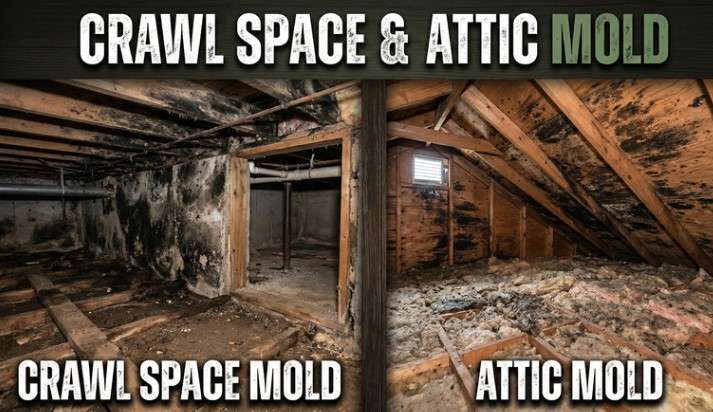
Western Washington roofs face overcast pressure for months at a time. A slow leak that drips through attic insulation, batt fiberglass, and ceiling drywall can technically start as Category 1 rainwater but arrive on the living room floor as Category 2 after picking up dust, animal droppings, and old organic material from the cavity. This is the exact mechanism behind many hidden mold colonies that develop after a long-running roof leak.
Post-Flood Saturation
After major events like the December 2025 to early 2026 flooding that affected parts of Auburn and surrounding King County, residents returning to wet homes are dealing with Category 3 water by default. Even after the visible water recedes, contaminated moisture stays trapped in drywall, insulation, and subflooring. The follow-on mold risks that surface in the weeks after a flood are why the S500 mandates aggressive material removal in Category 3 work, not optimistic attempts at drying.
What Happens When a Category Is Misclassified
This is where homeowners get hurt. There are two failure modes, and both are common.
In the first, a Category 2 or 3 loss gets scoped and dried as Category 1. The visible repair looks finished. Six to ten weeks later, mold appears behind the drywall, the family starts experiencing respiratory symptoms, and a second job (often much larger than the first) is required. Insurance may or may not cover the second round, depending on how the original cause was documented.
In the second, a Category 1 loss gets overscoped as Category 2 or 3, leading to unnecessary demolition and inflated invoices. This is less common but does happen, particularly when the original technician lacks IICRC certification and defaults to aggressive material removal as a precaution.
Both situations underline the same point: the category should be assigned by a certified technician, documented in the project file with photographs and moisture readings, and shared in writing with the insurance carrier before demolition begins. If a contractor cannot explain, in plain English, why a loss is being treated as a particular category, that is a signal to ask more questions.
What to Look for When Hiring a Restoration Contractor
A few credentials and behaviors separate operators who handle categories correctly from those who do not. The contractor should hold IICRC certification in Water Damage Restoration (the WRT designation), should be willing to walk through the category assignment on the first visit, and should produce a written scope of work that names the category and class explicitly. They should document daily moisture readings in a drying log and share it with the insurance adjuster. For Category 3 work, they should be able to explain their containment approach, PPE protocol, and biohazard disposal procedure before starting.
Local Washington State licensing matters, too. Restoration work that involves reconstruction (drywall replacement, flooring, framing repairs) falls under L&I contractor licensing requirements, and any company providing those services should be able to produce its current license number upon request.
The Bottom Line
Categories 1, 2, and 3 are not bureaucratic labels. They are the framework that drives every meaningful decision about a water loss: what gets dried, what gets torn out, what gets disinfected, what the insurance carrier will fund, and what the family is exposed to. Two losses that look identical from across the room can demand wildly different responses once a certified technician identifies the water source and contamination level. Understanding the categories will not make the water go away, but it will turn a confusing repair process into one that a homeowner can actually follow, question, and budget for. The single most valuable move after a leak is calling a certified team within hours, before time pushes the category in the wrong direction.
If water has entered a property anywhere across King County, including Tukwila, Bellevue, Auburn, Kent, or Seattle, DKJAY Restoration provides 24/7 emergency response with IICRC-certified water damage technicians, a BBB A+ rating, and Washington State licensing. Call (206) 819-4977 for immediate dispatch, or request a free consultation through the contact page.